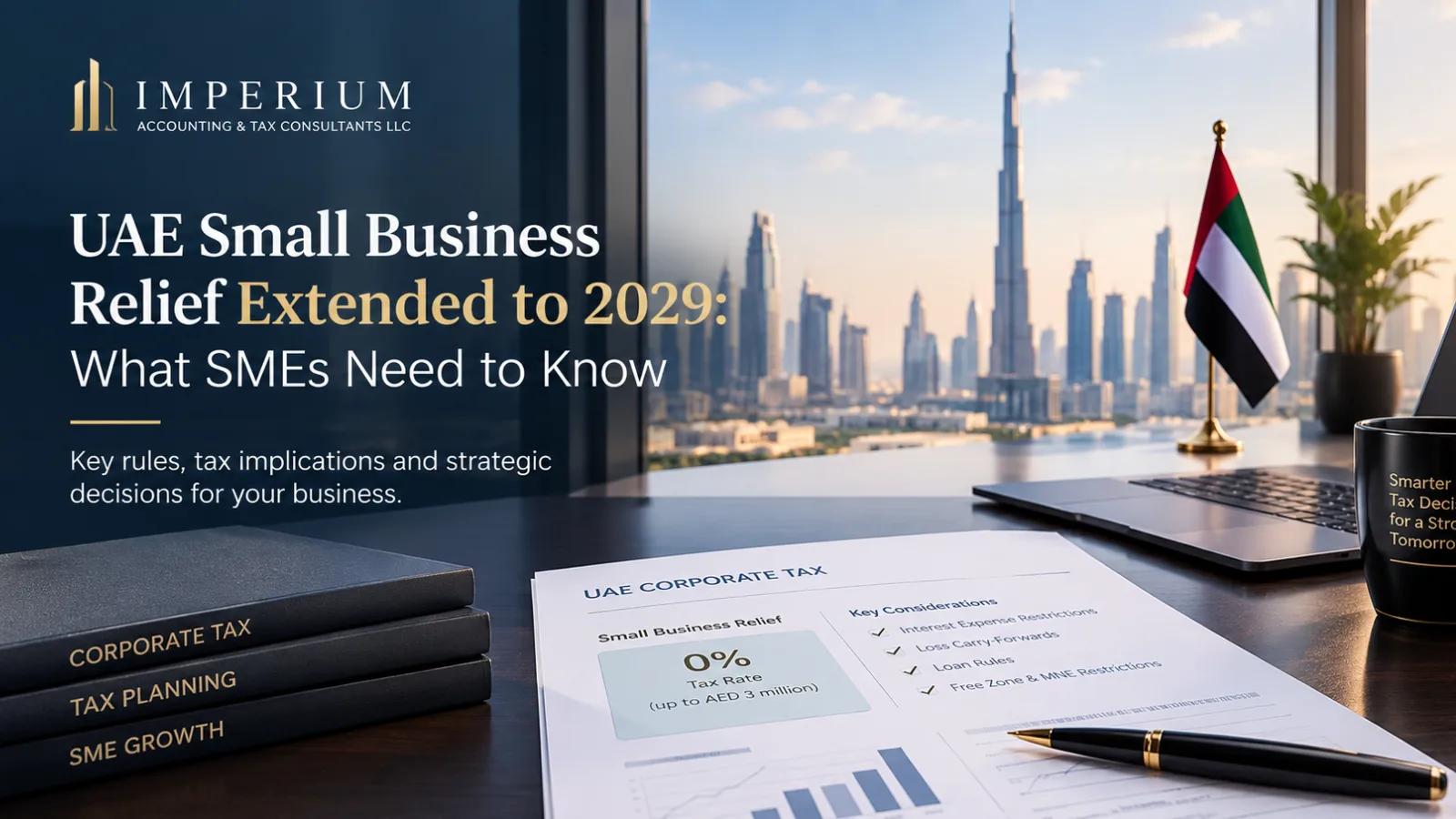
The UAE’s corporate tax system has reshaped how small businesses plan their finances. When the 9% corporate tax was introduced, many SMEs were relieved to learn that they could still pay 0% tax if their revenue stayed under AED 3 million. For most startups, this looked like an easy decision — choose Small Business Relief (SBR) and avoid tax.
But tax relief is never just a simple benefit. While SBR helps with short‑term savings, it can also influence how your business manages deductions, losses, and future tax planning. Understanding these details is essential for making smart long‑term decisions.
1. Relief Extended Until 2029
One of the biggest updates is that SBR is now available until December 31, 2029. This gives SMEs a longer period to benefit from the 0% tax rate. The AED 3 million revenue threshold remains unchanged.
This extension provides stability and allows small businesses to grow without immediately entering the 9% tax bracket. It also reflects the UAE’s commitment to supporting entrepreneurship and SME development.
2. The Hidden Issue: Interest Expense Restrictions
Choosing SBR means you cannot deduct any interest expenses for that tax year — and you cannot carry them forward either.
Interest expenses include more than just loan interest. They also cover:
- Loan arrangement fees
- Guarantee or underwriting fees
- Legal fees related to financing
- Early repayment penalties
For businesses that rely on loans or financing, losing these deductions can reduce future tax efficiency. When you choose SBR, you are essentially declaring that you have no taxable income to offset these costs.
3. Why Some SMEs Should Consider Opting Out
SBR is optional every year. In some cases, not choosing SBR can be more beneficial.
You may want to opt out if:
- Your business is making losses: These losses can be carried forward indefinitely and used to reduce future taxable profits.
- You have high interest expenses: These can be carried forward for up to 10 years if you do not choose SBR.
- You expect rapid growth soon: Preserving deductions today can significantly reduce tax once your revenue exceeds AED 3 million.
Opting out is a strategic move for businesses preparing for long‑term expansion.
4. Important Loan Rules Based on Date
Interest deductibility depends on when your loan was taken:
- Loans before December 9, 2022: Interest is fully deductible.
- Loans after December 9, 2022: Interest is deductible only up to AED 12 million, and anything above that is limited to 30% of EBITDA.
This rule is especially important for SMEs with large financing needs.
5. Free Zone Companies and MNE Restrictions
Free Zone companies can use SBR, but they cannot combine it with Qualifying Free Zone Person (QFZP) status. Businesses earning qualifying Free Zone income usually benefit more from QFZP.
Additionally, companies that are part of a multinational group with global revenues above AED 3.15 billion cannot use SBR at all.
How Imperium Helps SMEs Make the Right Tax Decisions
Imperium Accounting & Tax Consultants supports SMEs with clear, practical tax guidance tailored to their business model and growth plans. We help companies:
- Decide whether SBR or standard tax treatment is better
- Plan interest deductions and loss carry‑forwards
- Structure Free Zone operations correctly
- Stay compliant with UAE tax regulations
- Build long‑term tax strategies that support future expansion
With expert advice and hands‑on support, Imperium ensures SMEs don’t just save tax today — they position themselves for stronger, smarter growth tomorrow.
Imperium Editorial Team
Accounting & Tax Insights
Research and analysis from the Imperium Accounting & Tax Consultants LLC team, reviewed for accuracy before publication.